
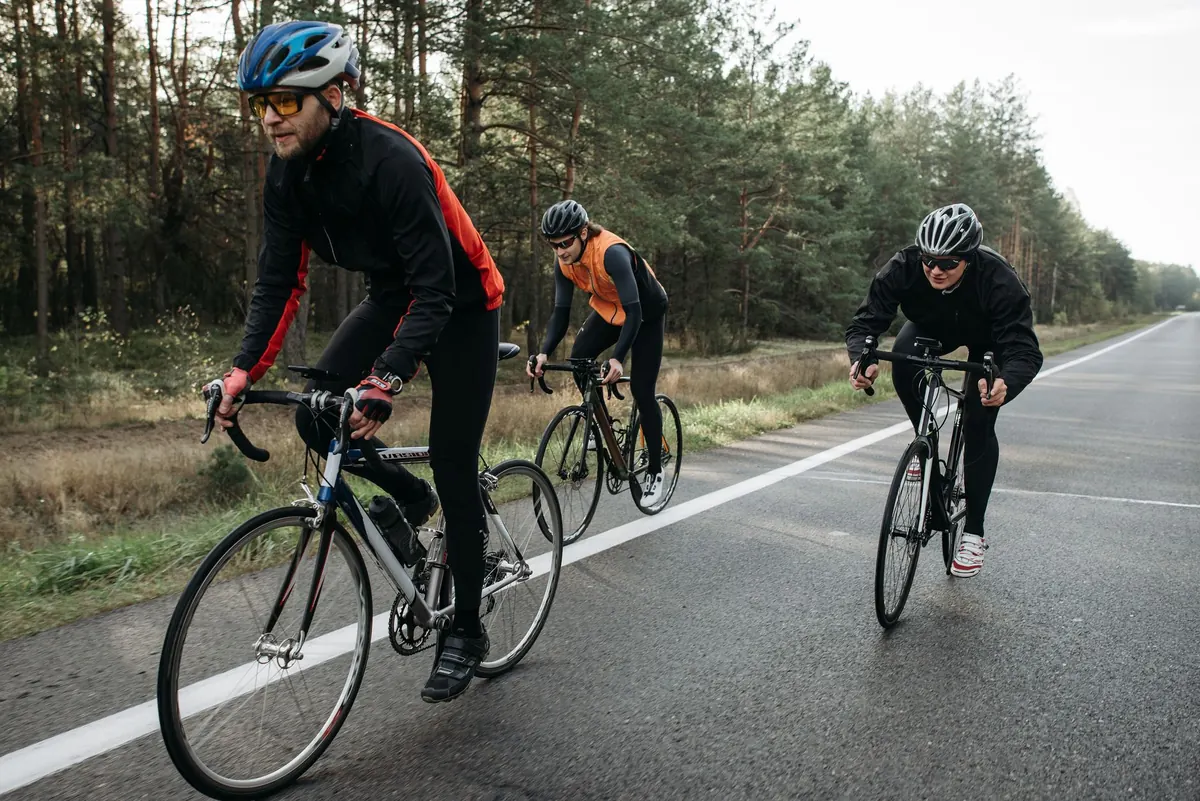
Most cyclists treat pain as a badge of honour, something to push through until the season ends. That approach rarely works. A twinge behind the kneecap becomes a nagging ache, then a reason to skip rides altogether. The good news is that the majority of cycling discomfort traces back to a handful of fixable causes: saddle height, cleat position, handlebar reach, and the strength of the muscles holding your posture together. Here is how to work through the most common complaints, one adjustment at a time.
Start With the Three Contact Points
Your body meets the bike in exactly three places: pedals, saddle, and handlebars. Almost every pain story begins at one of them. Before you change anything, take a step back and look at your position as a whole, because fixing one contact point often shifts the others.
A useful first move is to film yourself riding on a trainer from the side, using your phone at hip height. Watch for excessive hip rocking, a bouncing knee at the top of the stroke, or shoulders that creep up toward your ears after ten minutes. These small tells point you toward the right adjustment far faster than guessing.
Knee Pain: Height, Cleats, and Cadence
Knee pain is the most common complaint among regular riders, and the location often tells you what to change.
- Pain at the front of the knee usually means your saddle is too low or your gear is too hard. Raising the saddle a few millimetres and spinning a slightly easier gear often relieves it within a week or two.
- Pain behind the knee tends to point to a saddle that is too high, which forces you to reach for the pedal and overextend.
- Pain on the outside of the knee is frequently linked to cleat rotation. If your feet are locked into a straight line but your natural stance is slightly turned out, the knee absorbs that mismatch on every stroke.
For cleats, start neutral and adjust in small steps. Move the cleat back toward the mid-foot if you get hot spots or pressure under the ball of the foot. Give each change at least three or four rides before judging it, and change one thing at a time so you know what actually helped.
Cadence matters too. Grinding at 60 rpm puts far more load through the joint than spinning at 85 to 95. If your knees ache on climbs, try shifting down a gear or two and staying seated longer.
Back and Neck Discomfort
Lower back pain on the bike is rarely a spine problem on its own. It usually means your hips are working harder than they should, either because your reach is too long or because your core and glutes tire early and your lower back takes over.
Check your handlebar reach first. If your arms are locked straight and your shoulders are pushed forward, the bars are too far away. A shorter stem, even by 10 millimetres, can transform how the bike feels on a two-hour ride. Raising the bars slightly also helps riders who spend most of their time in the hoods rather than the drops.
Neck and shoulder tension usually comes from holding your head up at an awkward angle. Tilt your helmet slightly forward, drop your shoulders away from your ears, and change hand position every few minutes. On longer rides, sit up briefly, roll your shoulders back, and reset your posture before fatigue sets in.
Off the bike, the fix is strength work. Dead bugs, bird dogs, and glute bridges build the endurance your lower back needs to hold a stable position for hours. Two short sessions a week is enough to notice a difference.
Saddle Discomfort and Numbness
Saddle pain is the issue riders talk about least and suffer from most. It rarely means you need a softer saddle. In fact, more padding often makes things worse by compressing soft tissue and creating friction.
Start with tilt and height. A saddle that is nose-up will press into you; a saddle that is too high makes you rock side to side, which causes chafing. Set it roughly level, then adjust by a degree or two at a time.
Width matters as much as shape. Your sit bones should rest on the wider rear section of the saddle, not on the narrow nose. If you feel pressure in the middle rather than under your sit bones, the saddle is likely too narrow or too soft.
Position on the saddle counts too. Sit back so your sit bones are supported, and avoid sliding forward when you push hard. Stand out of the saddle every ten to fifteen minutes on long rides to restore blood flow. Good padded shorts, worn without underwear, reduce friction more than any gel cover will.
If pain persists for more than a few weeks, or you notice numbness that does not resolve shortly after riding, see a physiotherapist or doctor who works with cyclists. Persistent numbness is not something to train through.
Strength Work That Pays Off on the Bike
Bike fit only takes you so far. A position that feels comfortable for twenty minutes can fall apart at ninety if your supporting muscles fatigue. Three areas deserve attention.
- Glutes. Weak glutes push the workload onto your quads and lower back. Squats, hip thrusts, and step-ups build the power you need to hold your position.
- Core. Planks, side planks, and dead bugs teach your trunk to stay stable while your legs turn over.
- Hamstrings and calves. Tight hamstrings tilt your pelvis and contribute to back pain. Regular stretching after rides keeps them from pulling your posture out of shape.
Keep the sessions short and consistent. Twenty minutes twice a week beats a two-hour gym binge once a month, especially when you are also riding.
Putting It All Together
Work through your pain in order. Fix the contact points first, since they are free and often solve the problem outright. Then build the strength to hold a good position under fatigue. Change one variable at a time, keep notes on what you adjusted, and give each change a fair trial before moving on.
If you have been riding for years in the same setup, expect your body to need a week or two to adapt to a new position. Soreness from unfamiliar muscles is normal; sharp or joint pain is not. When something hurts in a way that feels wrong, stop and reassess rather than pushing through. A professional bike fit is money well spent if self-adjustment stalls, and it pairs well with the strength work above. Treat your position as something to maintain, not something you set once and forget.
Photo: Pavel Danilyuk / Pexels